Barabbata Festival in Marta: A Unique Cultural Celebration on Lake Bolsena
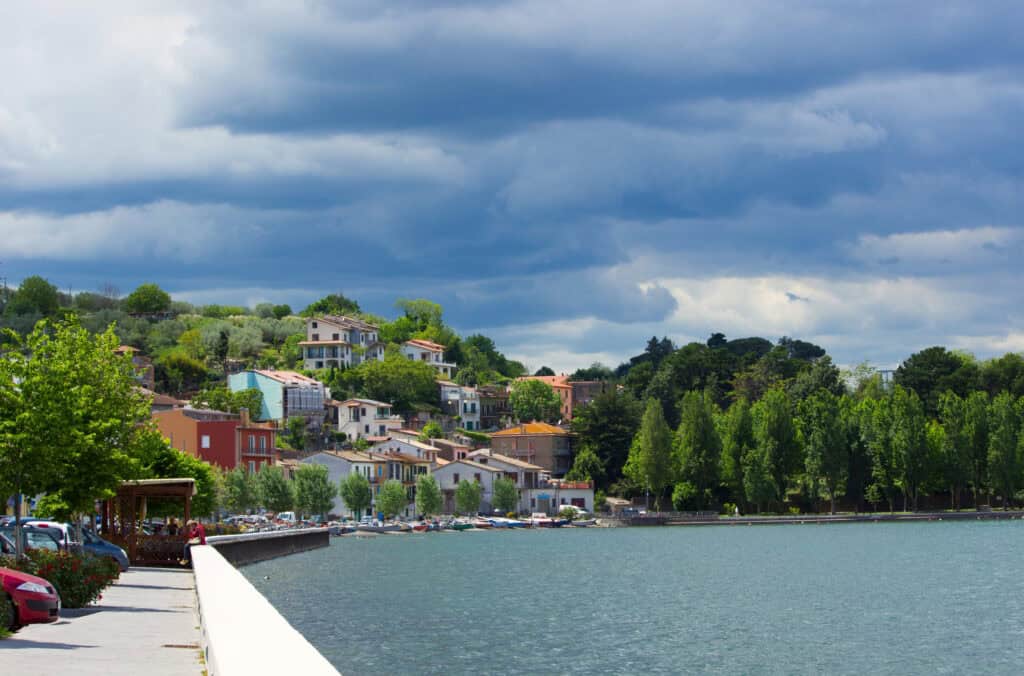
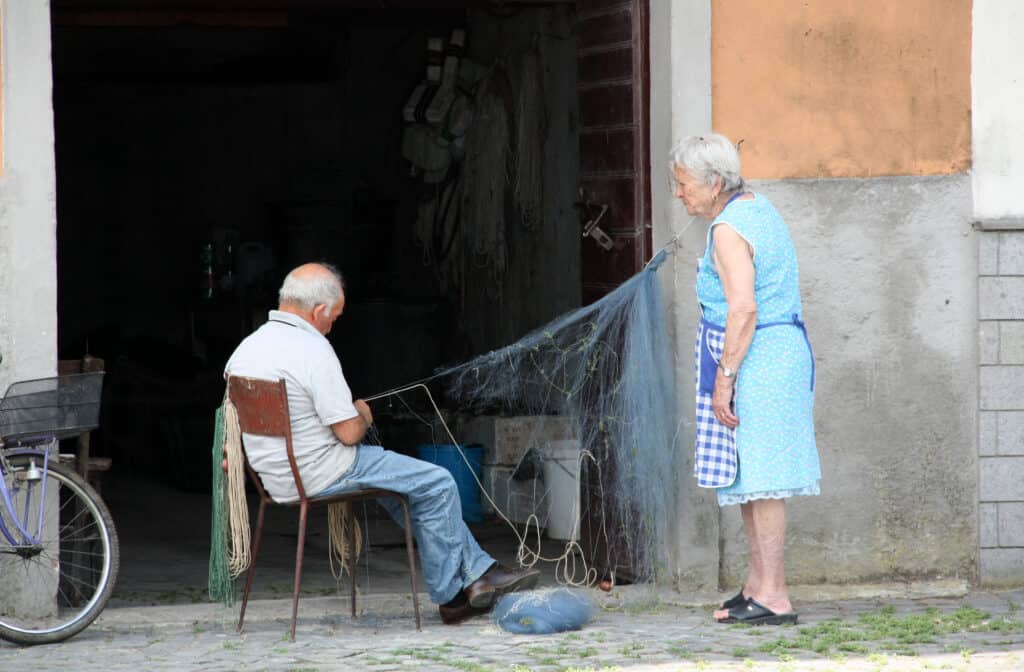
On the 14th of May, Marta, a fishermen’s village on the lakeside of Bolsena Lake, hosts the Madonna of the Mountain Festival, patron saint of the town.
The local community dresses up the village in flowers and banners in Her honour and organises a joyful parade to bring offerings to Her altar.
A Tradition Deeply Rooted in Marta’s Culture: The Festival’s origins and its names
One of the many folklore festivals in Italy, the birth of the tradition is lost in time as well as the origin of its name. In fact, it is not clear when the Madonna of the Mountain Festival became known also as “Barabbata”. In addition this term seems to be derogatory, older folks even correct the young when they use it. Some suggest that it was a way of the neighboring towns around Marta to mock the locals, others believe that it comes from the custom of “looking for Barabba” during the Carnival. Some linguists have proposed that the name came from the Greek word Barà (goods) or the German Batà (token). Another nickname comes from the rite: some call it “the Passate Festival”, because the participants pass three times in front of the church and then leave an offering on the altar.
Historians agree that the birth of the festival can be traced back to pagan rites and offerings in honour of goddesses like Feronia, goddess of woods and crops, or Maia, goddess of fertility and spring. Even nowadays the parade ends with crops and fishes as gifts to Mary to thank her for protecting last year’s harvest and to plead for a bountiful one next year.
The Parade, A living expression of Faith and Heritage
The festival begins in the morning when it is still dark and it ends in the evening with a firework show on the lake. The length of the event doesn’t discourage devotees and curious onlookers, who arrive early in the morning to secure the best spot to enjoy the Barabbata. In fact, the most fascinating moment is the Parade.
It starts from the lakefront, passes through the main square, climbs the slope of the mountain and stops at the top, where the sanctuary of the Madonna del Monte is built overlooking the town and the lake.
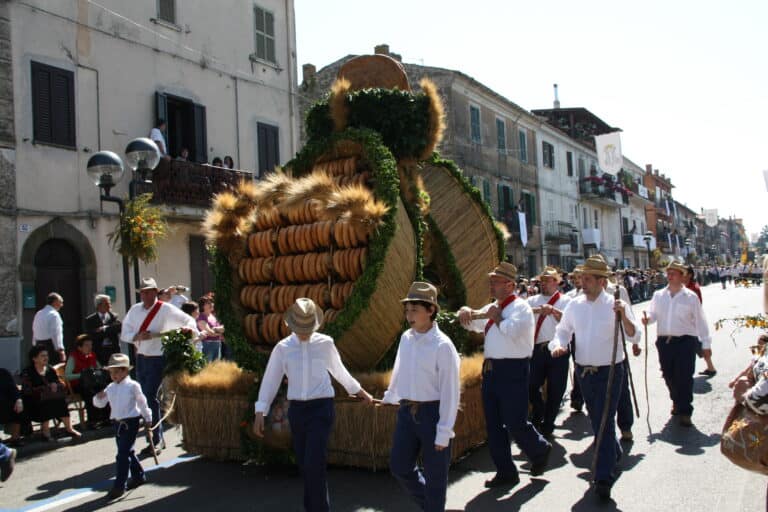
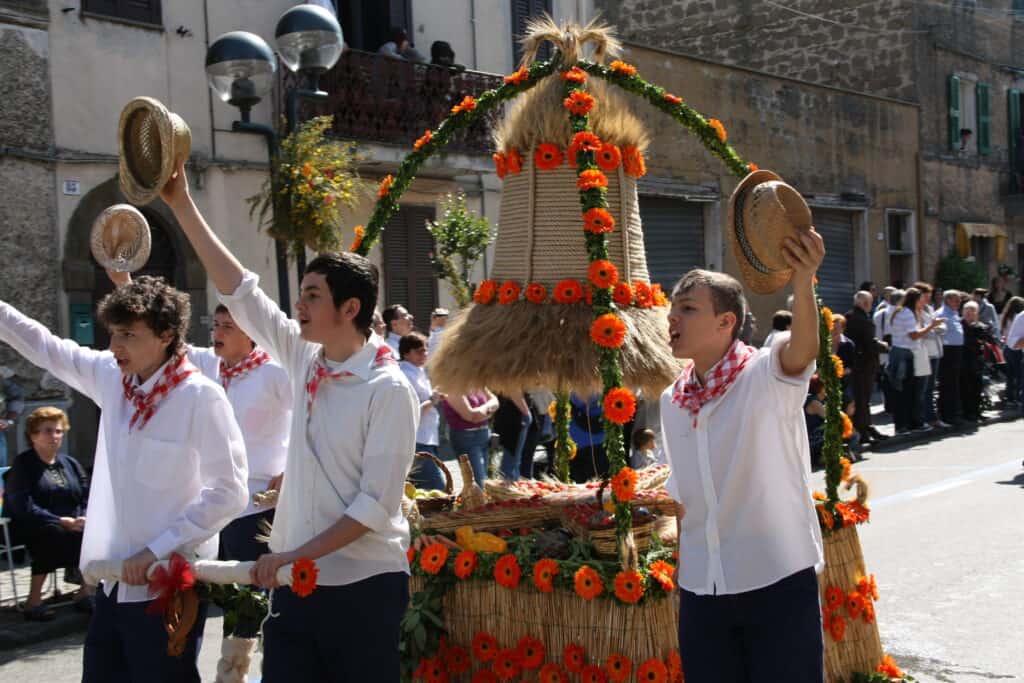
As per tradition, only Marta’s men can walk this path. They wear the traditional clothes of their job: the Casenghi (Sappers) on horses, the Bifolchi (guardians of the herd) with oxes, donkeys and sheeps, the Villani (farmers) divided in Sementelli (sowers), Vanghe (diggers), Falciatori (harvesters) and Mietitori (reapers), and lastly the Pescatori (fishermen).
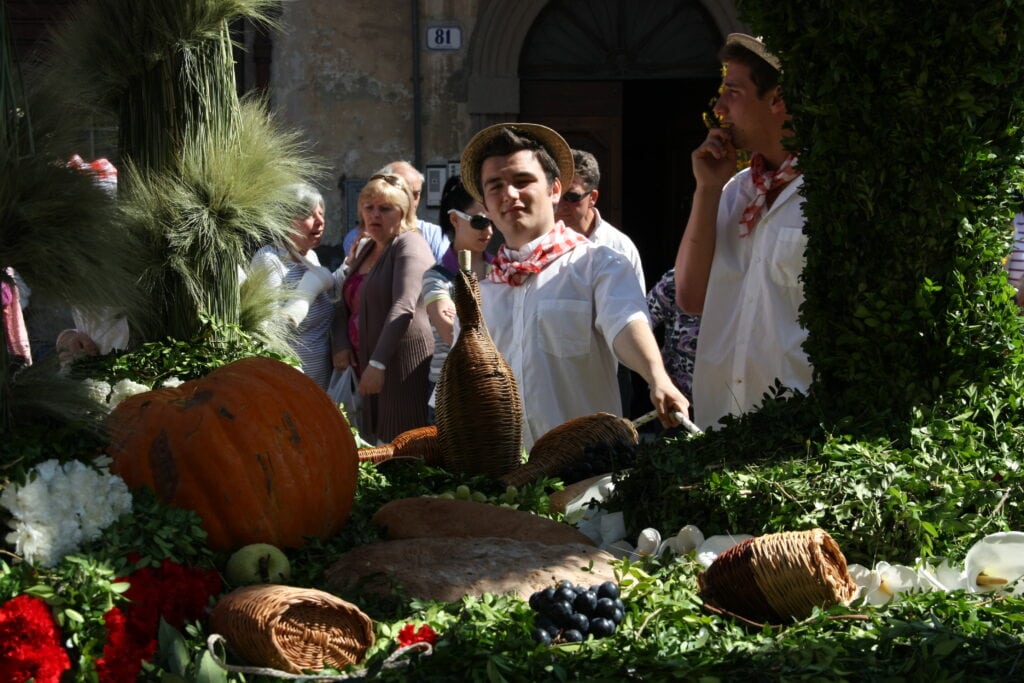
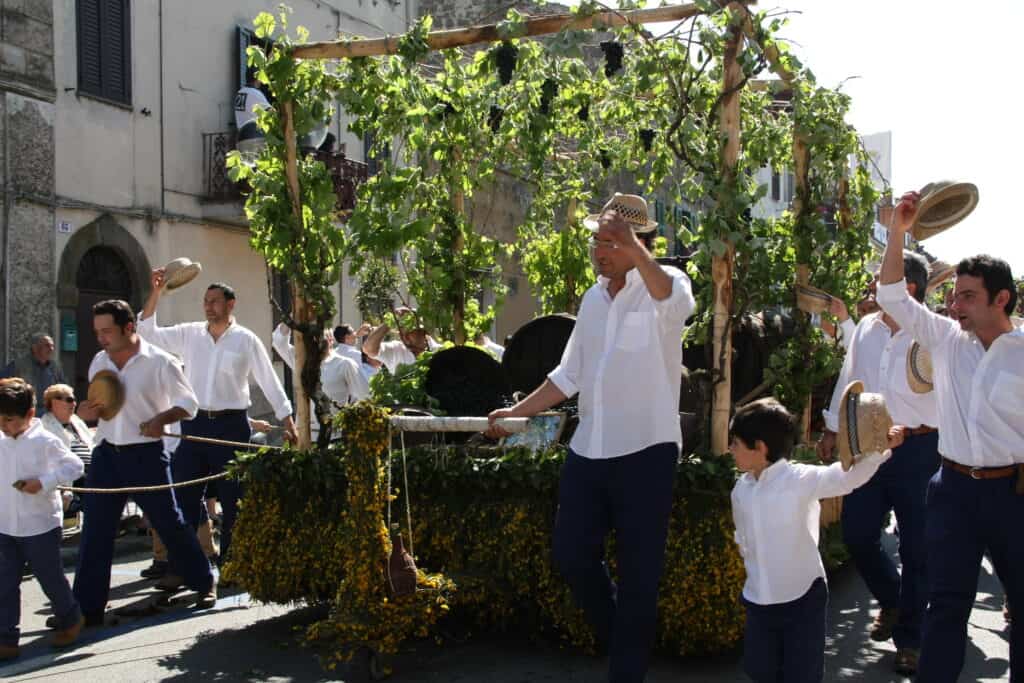
Each group brings the fruits of their labour as an offering while chanting and singing. Those are arranged in elaborate decors on the Fontane, floats embellished with working tools and flowers, mostly roses, associated with Mary, and brooms, that in May scent Tuscia’s countryside.
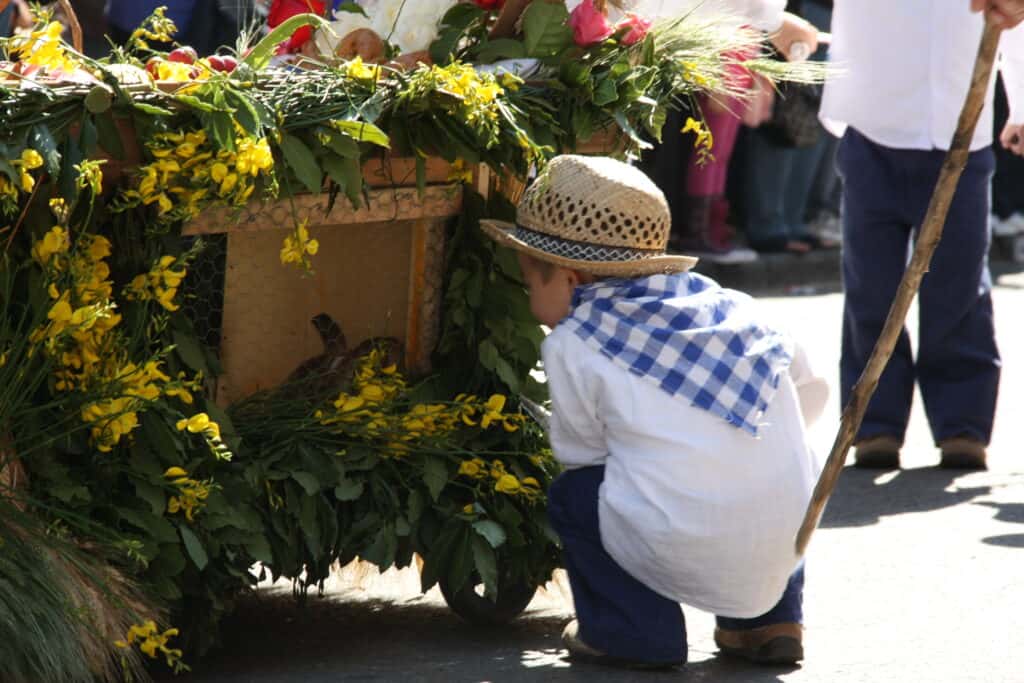
As well as men, young people and children take part in the parade and they even drag floats that match their size. Even newborns can be seen all dressed up in their father’s working clothes, truly a testament of how much the tradition is deep-rooted in the community’s life.
Also, the locals participate in their own way: flowers and petals rain down on the procession when it passes under their balconies. In fact, it is common for the believers that follow the parade to walk on a carpet of flowers as if it was an Infiorata.
Lastly, the Parade reaches the Sanctuary and the crowd scatters: some enter the church to attend the mass, some gather together for a snack based on wine and a porchetta bun while waiting for the service to end.
Under the fresh shadow of the trees you could closely admire the Fontane or look at children in traditional costumes running around with others in modern clothes, a little farther one Passante pours wine for his friend while still on the float, in a setting where the past and the present mix under the festive bells ringing.