Bisentina Island, the paradise of the Farnese family on Lake Bolsena
Since the prehistoric era, humans have traveled and lived on the Bisentina Island. A safe haven during barbaric invasions, then a prison for heretics in the Middle Ages, and lastly the private paradise of one of the most influential families of the Roman Renaissance. This island is truly a jewel hidden in plain sight on Lake Bolsena.
The Farnese Family and its most elusive member
The Farnese family originated in the Tuscia area, now divided between the lower Tuscany and northern Lazio, and its history dates back to the middle ages, even before 1000 AD. Its name steadily rose to fame during the city-states period because of successful alliances and favourable outcomes during the frequent wars of the time. Alongside the military power, the family managed to secure both new properties, like the Bisentina Island, and influence through skillfully arranged marriages. An example is the one with the Caetani family in which Pope Boniface VIII was born. Thanks to this union, the Farnese family was introduced to the Rome nobility and its ascension accelerated greatly.
Giulia Farnese, the fortune maker of the family, was born from this marriage. When she was 14 years old her mother sent her to Rome to complete her education and be introduced to the nobility in order to find a suitable husband. She found it and so much more: Orsino Orsini married her, but she also became the second lover of Pope Alexander IV and the most loved. Her husband gladly turned a blind eye to the relationship in exchange for favors and territories, so Giulia could move into a palace close to the Vatican where the Pope visited her frequently.
The affair was carried out in broad daylight, but no one dared to confront the Pope about his conduct because of his power, so they resorted to gossip about his lover.
It is no secret that Giulia Farnese had both admirers and critics, as her nicknames suggest: for some she was “Giulia la Bella” (Giulia the Beauty), to other she was the “Sponsa Christi” (wife of Christ) or worse “the Pope’s whore”.
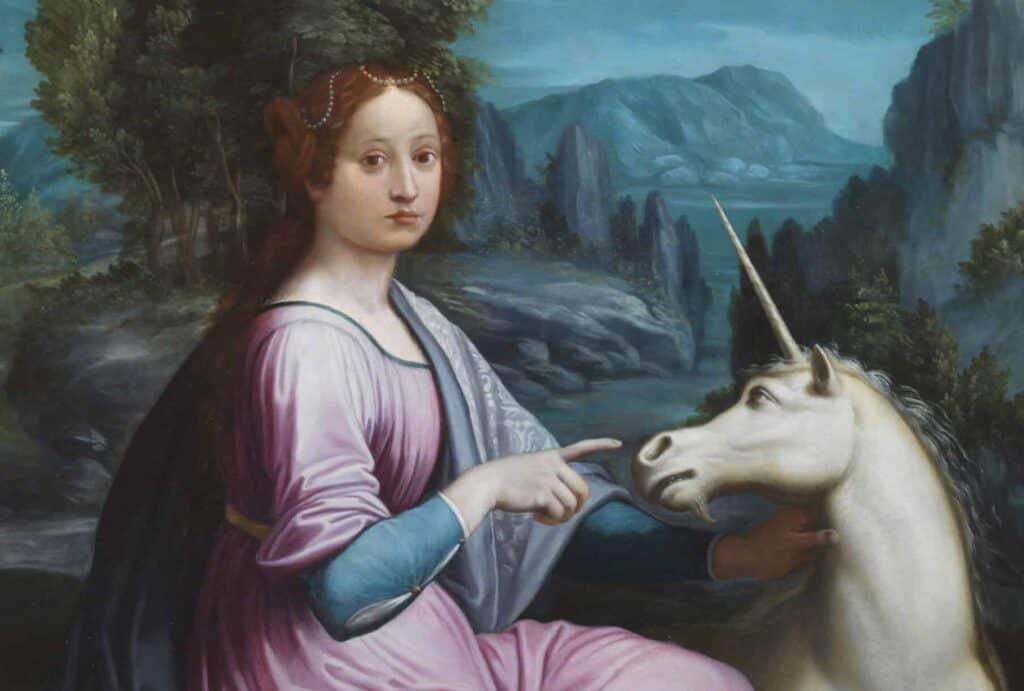
Her relatives were targeted too: her brother Alexander, the future Pope Paul III, was called behind his back “Cardinal Fregnese”, a pun based on his surname and the way he obtained the cardinal’s robe. He was aware of this mockery and some speculate that it is the reason why we don’t have any portrait of Giulia. Ashamed that his title came as a Pope’s favour to his mistress’s family, he had all of his sister’s portraits destroyed, or most of them at least.
After the end of the relationship with the Pope, Giulia dedicated herself to her family: she organized a good marriage for her daughter Laura, probably fathered by the Pope, and remarried a second time. She became governor of Carbognano and took residence in its castle from where she administered the land with proper manners. She left her castle only to return to Rome where she died a couple of years later for unknown causes, leaving no images of her and a testament where she gave instruction to be laid to rest on the Bisentina Island.
An Island as a personal paradise and the final resting place of Giulia Farnese
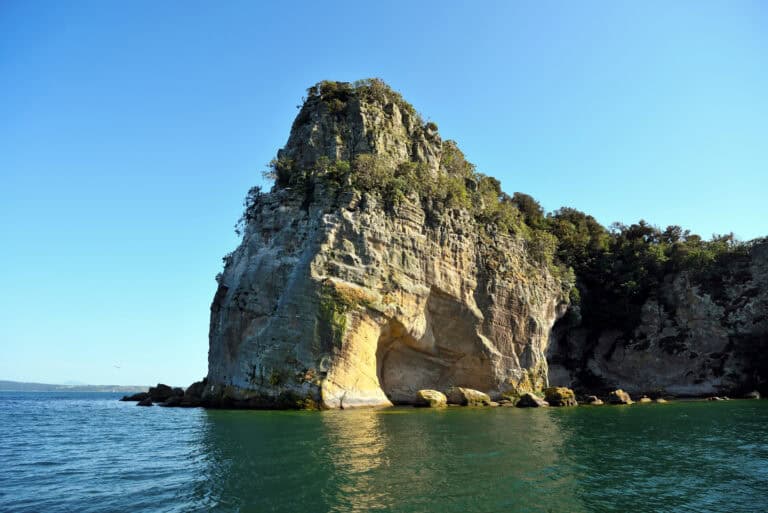
Islands in the middle of lakes have always fascinated onlookers by the lakeshores, and the ones in Lake Bolsena above all. There are the Martana Island, where it is rumored that the longboard Queen Amalassunta was killed and nowadays is a private property, and the Bisentina Island, that recently has been acquired by the Rovati Family and welcome visitors once again. Alongside tourists there are restaurateurs and researchers that piece by piece unveil the centuries long history of this piece of heaven.
The island has been inhabited by both the Etruscans and the Romans, then became a safe place during the invasions of the Longobards. The presence of people on the bisentina island became stable and a village was built on its land, later destroyed by the troops of the Pope Urban IV. The Pope claimed the island for himself and for quite some time it was known as “Isola Urbana”. Being empty, it was made into a prison for heretics and a refuge for hermites, until the Farnese family acquired it.
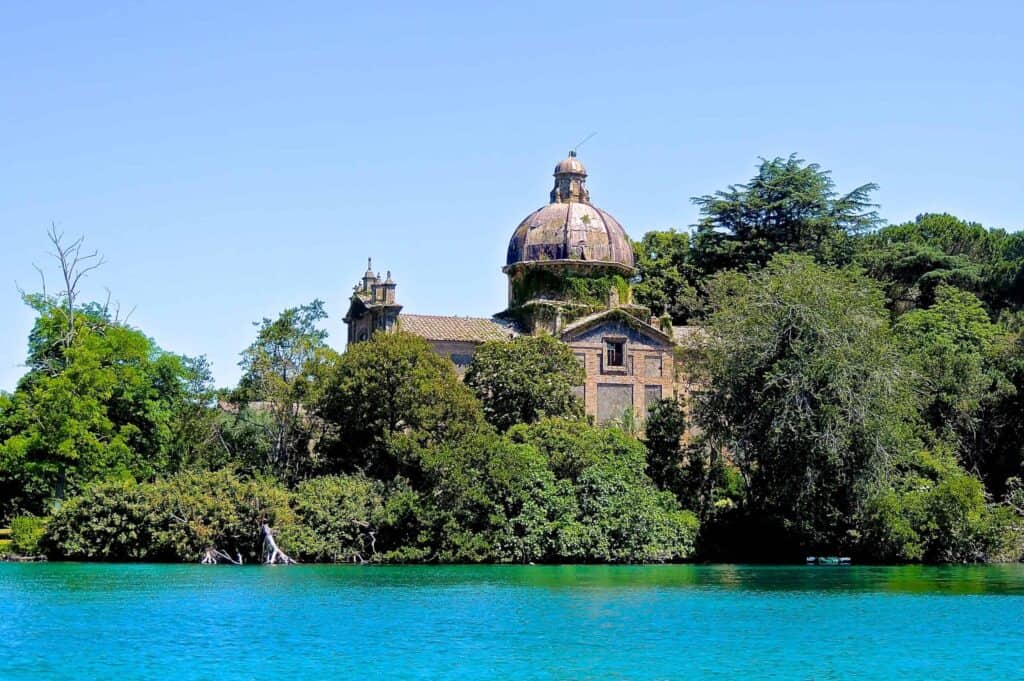
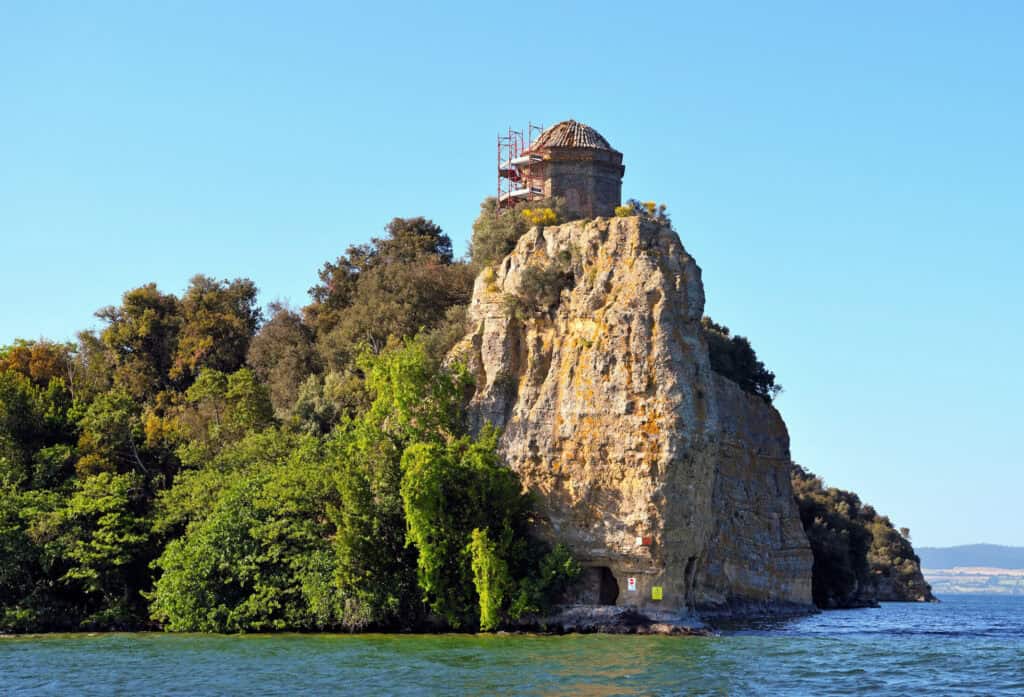
It was during these times that the Bisentina Island entered its golden Age: Ranuccio Farnese commissioned the church of Saints James and Cristopher, intended to become the family Mausoleum, and later on cardinal Alessandro Farnese the Young expanded the structure and the dome, still visible from the lakeshore. There are also other buildings: the friars that lived on the island built seven chapels in the image of Rome’s most important churches.
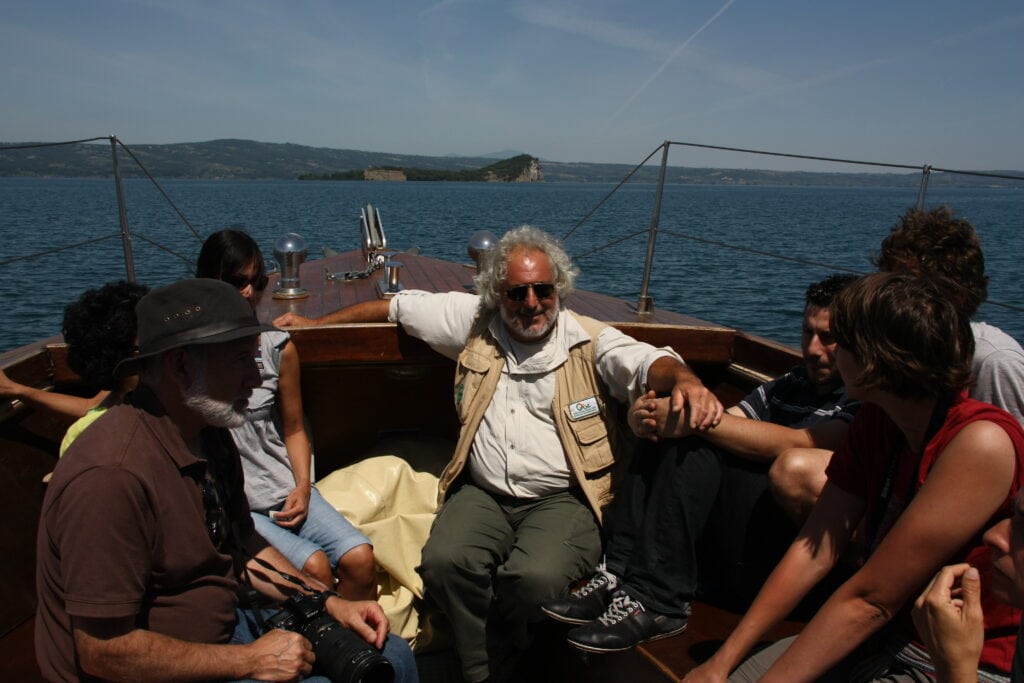
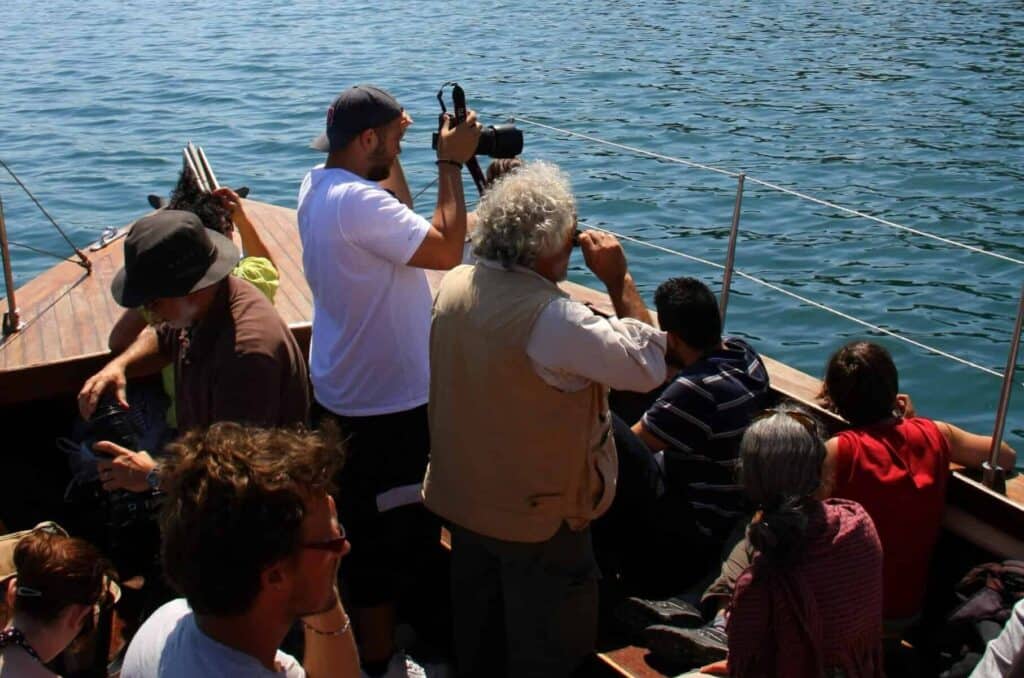
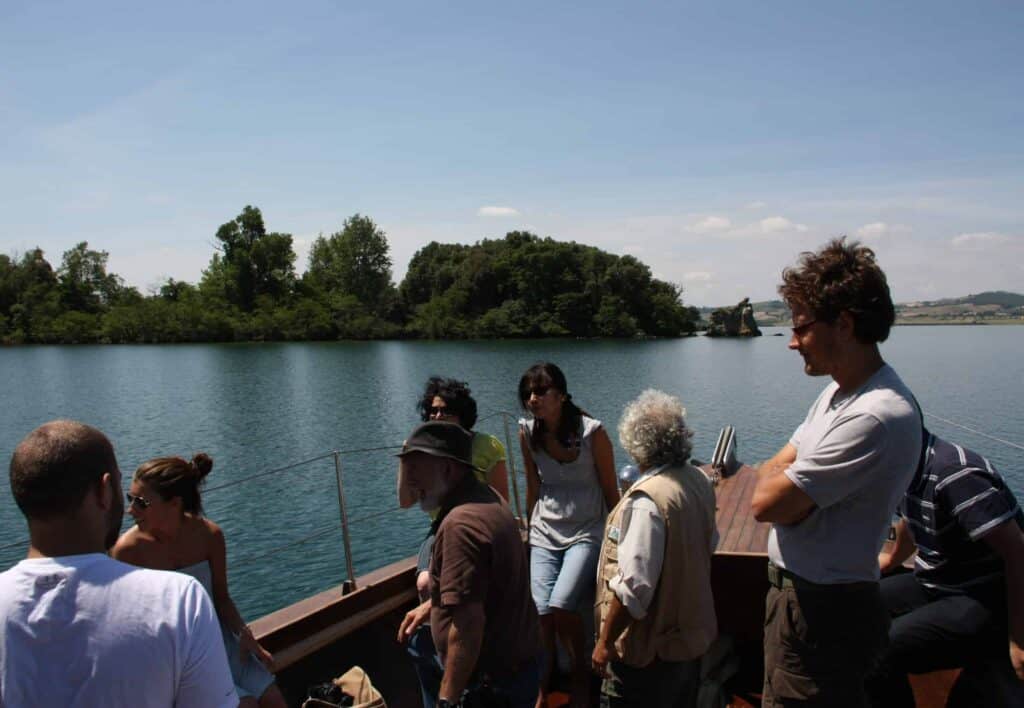
Throughout the centuries, the Bisentina Island has welcomed every kind of people: nobles, artists, poets, industrialists, and each of them has fallen in love with the beauty and peace of the place. So it is not surprising that Giulia Farnese arranged to be buried here in her testament. Unfortunately, there is no tombstone that indicates her last resting place in the mausoleum, but it is still possible to go for a boat tour on Lake Bolsena to reach the island and look for her. Here are the places that she loved and the paths she walked, maybe in the spring with the flowers in bloom or in the middle of summer escaping the scorching heat of Rome. Truly, a wonderful experience to be immersed in the most peaceful, lesser known aspect of her family history.