Into the Blue: the history of the Dyer’s woad
Absent from the earliest paintings and even missing from the vocabulary of some languages, blue is one of the rarest colours in nature and the most difficult to recreate. That is until the artisans learnt how to extract it from the woad, changing the art and the economy of many towns all over Europe. In Italy the main producer was the Marche region.
The “Paese della Cuccagna”, the Marche region
For a long time the colour blue has been linked to monarchies, religion and generally the richest people. Most of the pigment to recreate it came from minerals like Lapislazzuli, a semi-precious stone mined in Afghanistan and Egypt. It is no surprise that the condition needed to retrieve it made it accessible to just a small part of the European population, among which were the painters. During the medieval age Blue kept increasing its presence in frescoes, like the famous Saint Francis’s cycle in Assisi, churches’stained glass windows and royal coats of arms, but was mostly absent in clothes tinctures. Until the woad was brought into the picture.
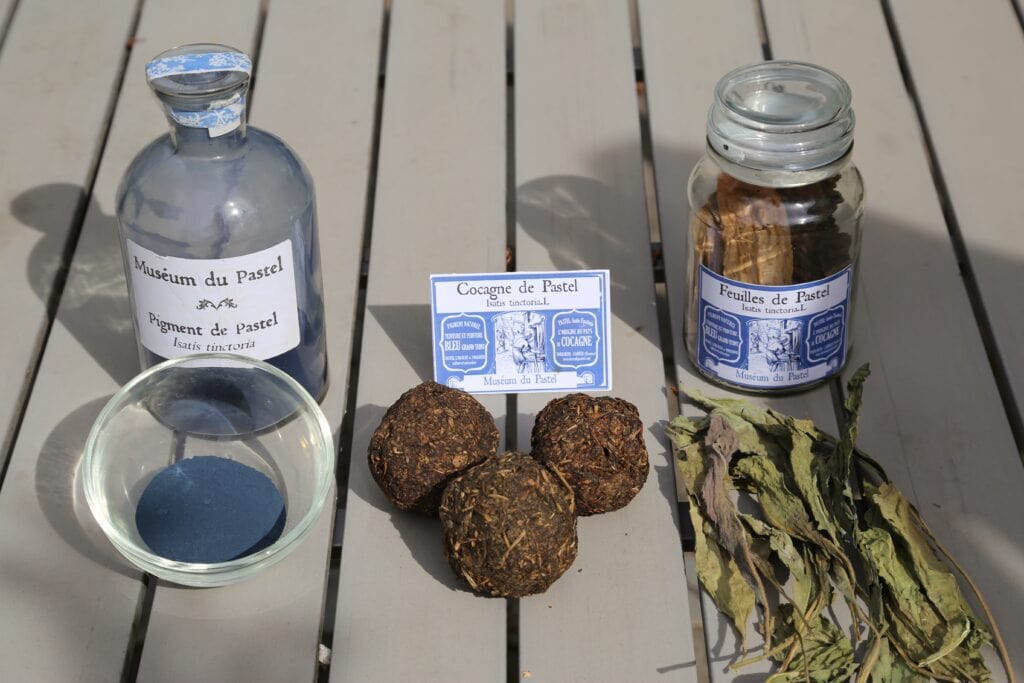
Its technical name is Isatis tinctoria and is a flowering plant in the family Brassicaceae (the mustard family) with a documented history of use as a blue dye and medicinal plant. The Marche region started to mass cultivate it in seven provinces, the most famous of which is Ancona.
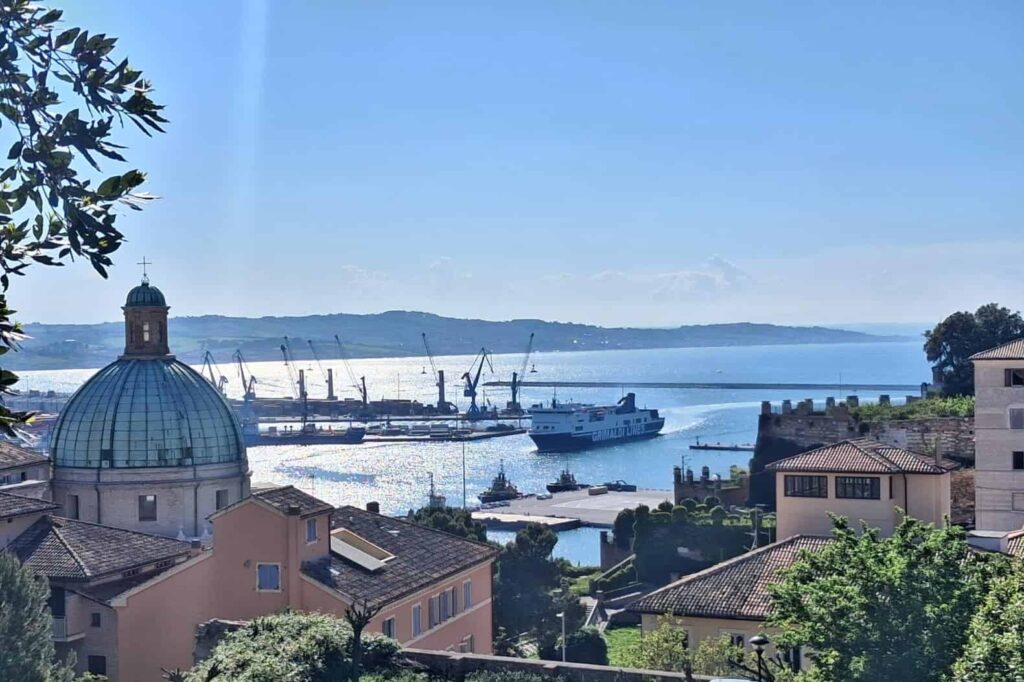
The blue pigment production in the city had a particular relevance because it was the only one of the seven provinces that had a port, helping with the transport and the commercial connection with the rest of Europe. It was the only city that had complete control over the line of production of blue, making it a powerful player in the economic balances of the world.
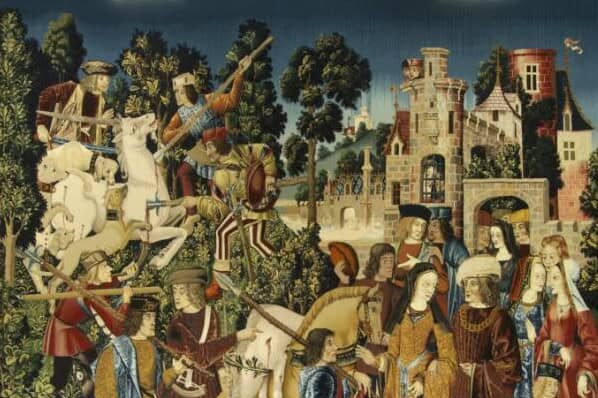
Thanks to this innovation, blue clothes and dresses started to appear all over Europe, but the dyer’s woad has also been found in tapestries and paintings. Ancona became so rich that it was known as “Paese della Cuccagna” (land of plenty), thanks to the “cocagne”, the French name of the block used to transport the blue pigment. The production of the pigment became so important for the city’s economy that the artisans were forbidden to reveal the techniques of the pigment’s extraction and the commercialization of the seeds of the plant were strictly regulated. Unfortunately these measures to protect the “know how” connected to the dyer’s woad were in vain: in the XVI century, indigo, a vegetal pigment imported from Asia, quickly substituted the woad, because it was easier to store, had a more vibrant color and ultimately had a simpler extraction process, making it cheaper.
As a result, the cultivation of the woad faded in the mist of time and was forgotten.
Beyond the Blue: the revival of the Dyer’s woad
The renewed interest in the woad originates from a very modern problem: nowadays textile colorants are made of artificial dyes and petroleum. Unsurprisingly, these are toxic for the environment and the people that come in contact with them. Even the people who wear these dyed clothes can experience their negative effects, although not to the same extent as the dyers.
When Europe noticed the harmful effects and made laws to protect the environment and the people working in this field, the owners moved the dyeing factories to second and third world countries. However, these governments are now reacting to the situation creating laws similar to the European ones, because they are unwilling to sacrifice their own to foreign holders that do not give anything back to their country.
This is where the dyer’s woad and many other plant-based dyes come into play.
In the 1970s, the historian Corrado Leonardi discovered beautiful linen tablecloths in the sacristies of the churches in the Valle del Metauro area. The most endearing parts were the blue decoration depicting holy symbols of resurrection and Eucharist, the same ones that could be found in famous frescoes such as “ll cenacolo di San Marco” of Domenico Ghirlandaio.
The first mystery arose: how was it possible to dye the thread blue?
Through meticulous research through churches’ archives and sales documents the name “dyer’s woad” resurfaced, as well as its importance in the economy of the medieval Marche region. The mystery expanded to the production of the woad: thanks to the documents, the historians knew that the Marche area was able to control the totality of the line of production, but because of the strict control over the cultivation and production there was no detailed information on how it was made.
It is now that the historian Delio Bischi comes into play: in the 1980s, he discovered fifty millstones in the Marchigian hills. Some had to be dug out, some others were repurposed as bases for fountains or crosses near churches, but each one of them matched perfectly in a xylography in Germany that depicted the first step of the production. The cultivations used to be near these millstones which made the process faster and easier.
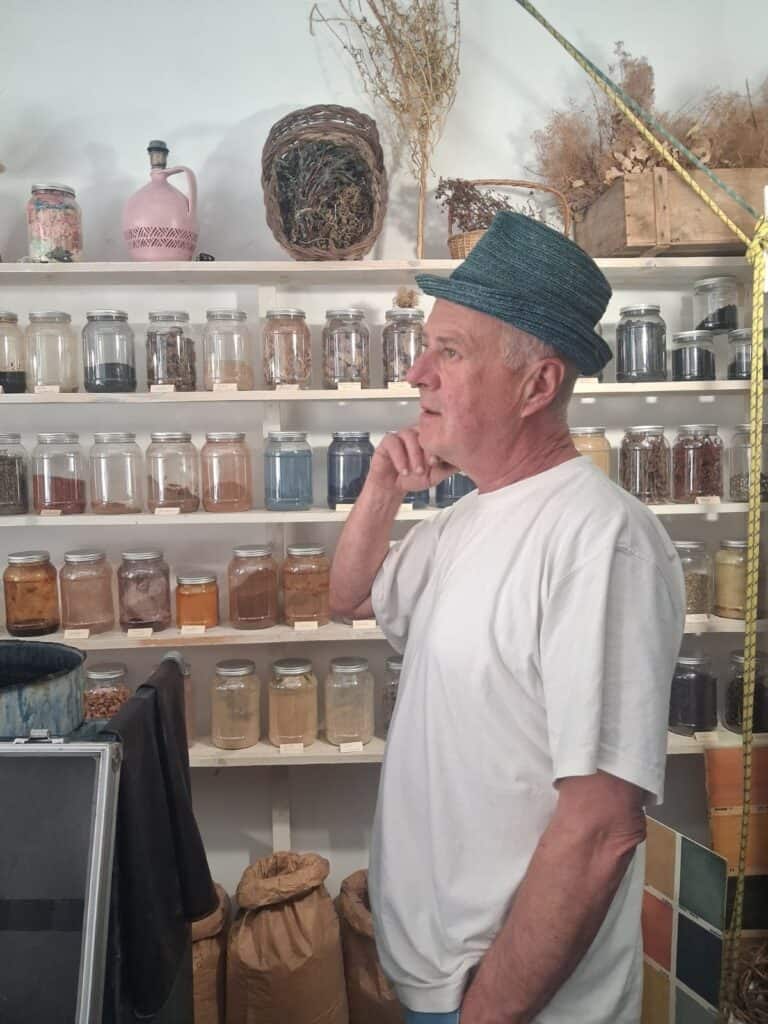
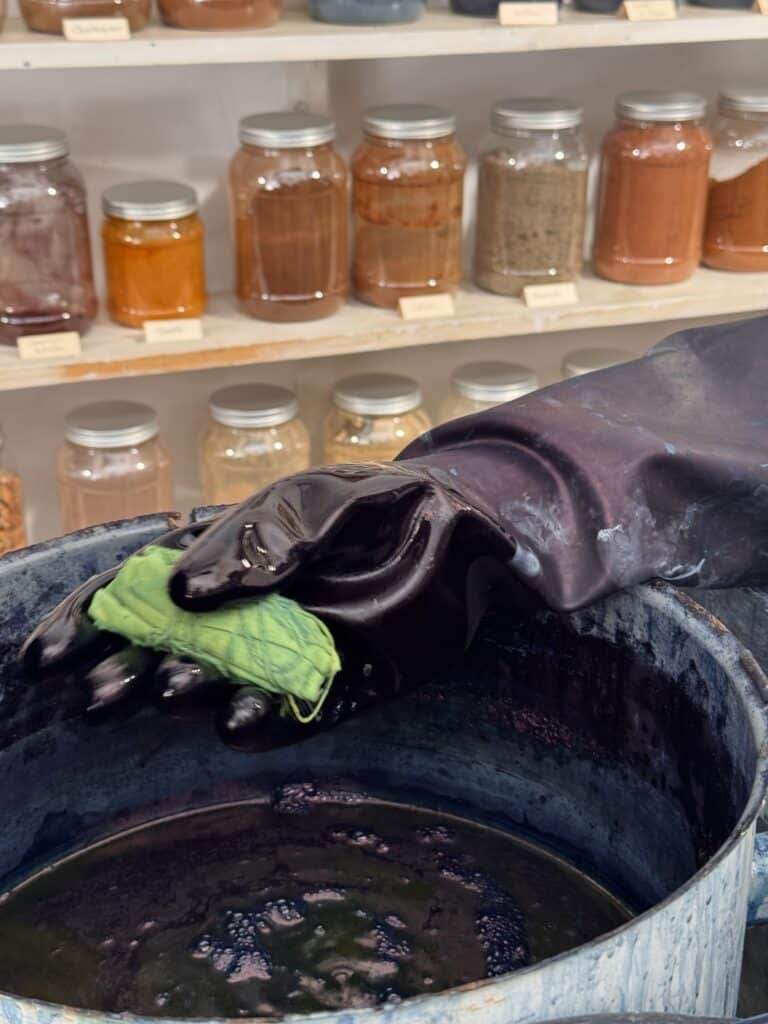
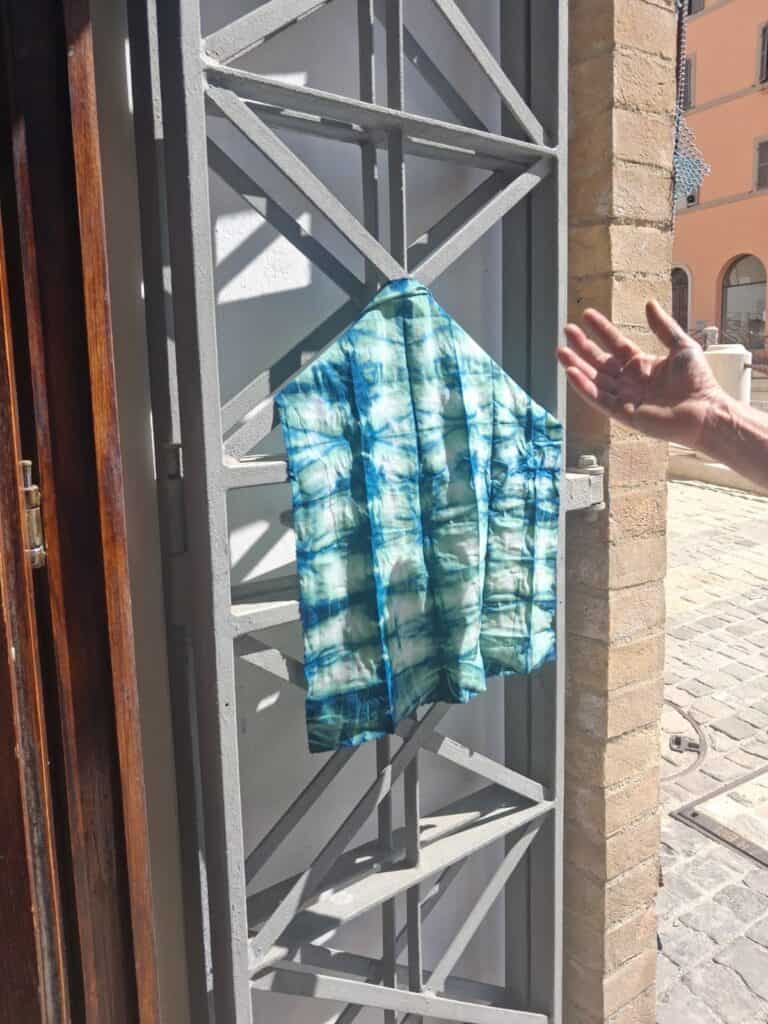
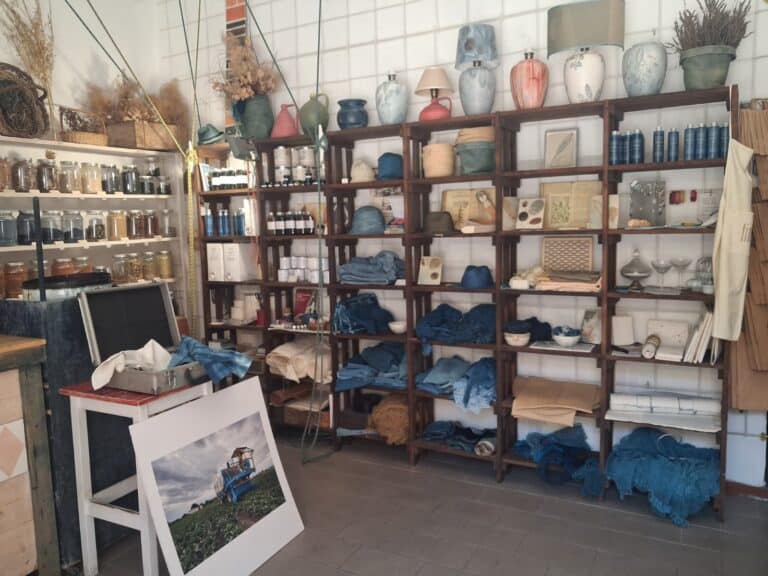
After discovering their work and meeting them, Massimo, a conservation expert turned local artisan, decided to recreate the line of work of the dyer’s woad and to use it again. Throughout the years, he rediscovered and perfected the process to extract blue from the woad, and made a name for himself in the textile dyes sector. Now he assists Italian clothes factories to take a greener way to dye their clothes and holds courses to show the public this revolution in the Marche region. He holds them in his “bottega”, a place that seems stuck in time: blue is everywhere, as well as the history that he rediscovered. The most beautiful detail is the wall of jars containing natural pigments of every colour. To listen to his tales and his knowledge feels like taking a step back in time, being in a dyer’s laboratory as an apprentice learning the dyer’s job and pride.