The Mystery of Italy’s Park of the Monsters
Near a small fortified village, a lush wood, known as the Park of the Monsters, still stands under the shadow of the town’s castle. Entering the gate the path guides the visitors into its depths. Suddenly, two sphinxes appear in front of them. They do not tell any riddles and how could they? They are statues, the first of many scattered across the wood, each one part of a tale that is still waiting to be told.
“Sol Per sfogare il Core…”
The Sacro Bosco, also known as the Park of the Monsters for the presence of grotesque sculptures scattered in a surreal landscape, is the oldest sculpture park in the modern world.
Pier Francesco Orsini, known as Vicino, built it from the middle of the 16th century and completed the first part of the work as early as 1552. He called it “Boschetto” (small wood) and he dedicated the park to his late wife, Giulia Farnese (not the famous lover of the Pope, but from the same family).
Unlike traditional Italian gardens, the Bosco represents a unique creation. While it belongs to the architectural and naturalistic culture of the late Renaissance, it also forms a hermeneutic labyrinth of silences, allusions, and illusions. Vicino Orsini, lord of Bomarzo until 1581, commissioned architect Pirro Ligorio to sculpt the local basalt rocks directly on site, transforming them into dreamlike creatures that appear at times threatening and at times persuasive.
The sculptures are free from reciprocal perspective and proportional relationships. Classical composure gives way to the Mannerist fascination with the bizarre and the grotesque, creating a disorienting relationship between art and nature through gigantic figures and surreal forms.
Numerous studies have attempted to solve the enigma of this grove, suspended somewhere between art, magic, and literature. Yet the Sacro Bosco remains a place steeped in mystery and fascination, capable of inspiring stories and stimulating the imagination of every visitor that pays.
The enigma of the monster
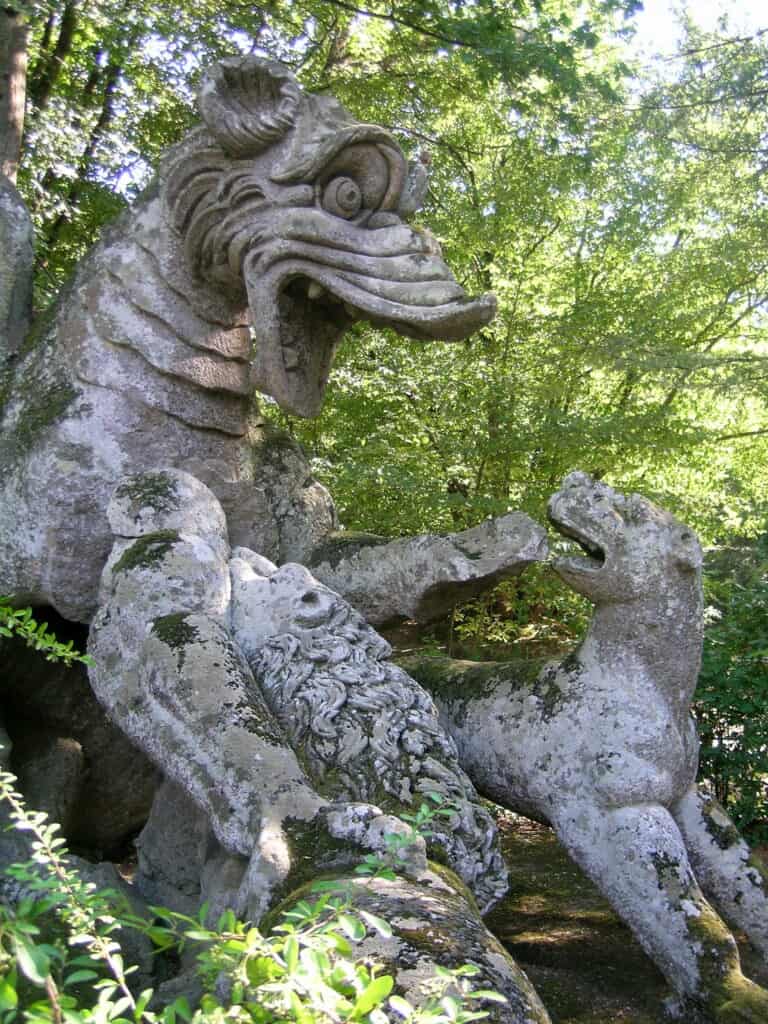
The grotesque sculptures were carved from basalt, a volcanic stone found in abundance throughout the area. Many of them bear enigmatic inscriptions, although only a small portion have survived the passing centuries.
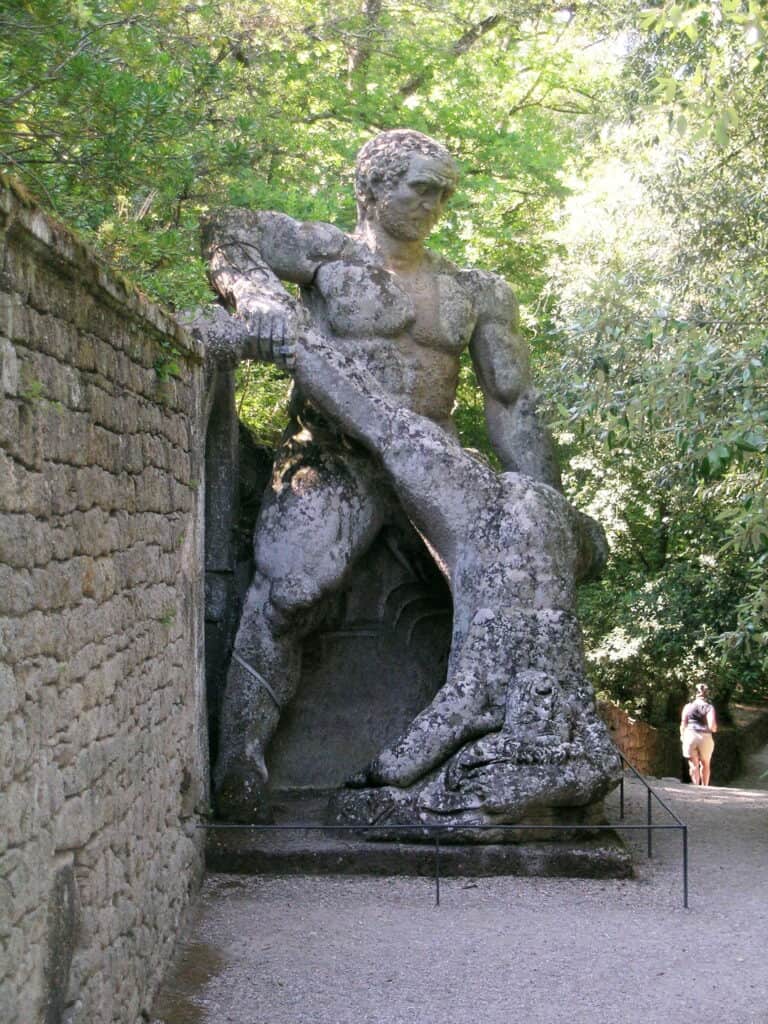
Throughout the wood, mythological figures emerge from stone and trees alike, silently observing travelers while guarding their secrets, some of which are told during guided visits of the park. Leaving the sphinxes behind, the curious visitor follows the path deeper into the untamed woodland, where two giant stone figures appear locked in combat.
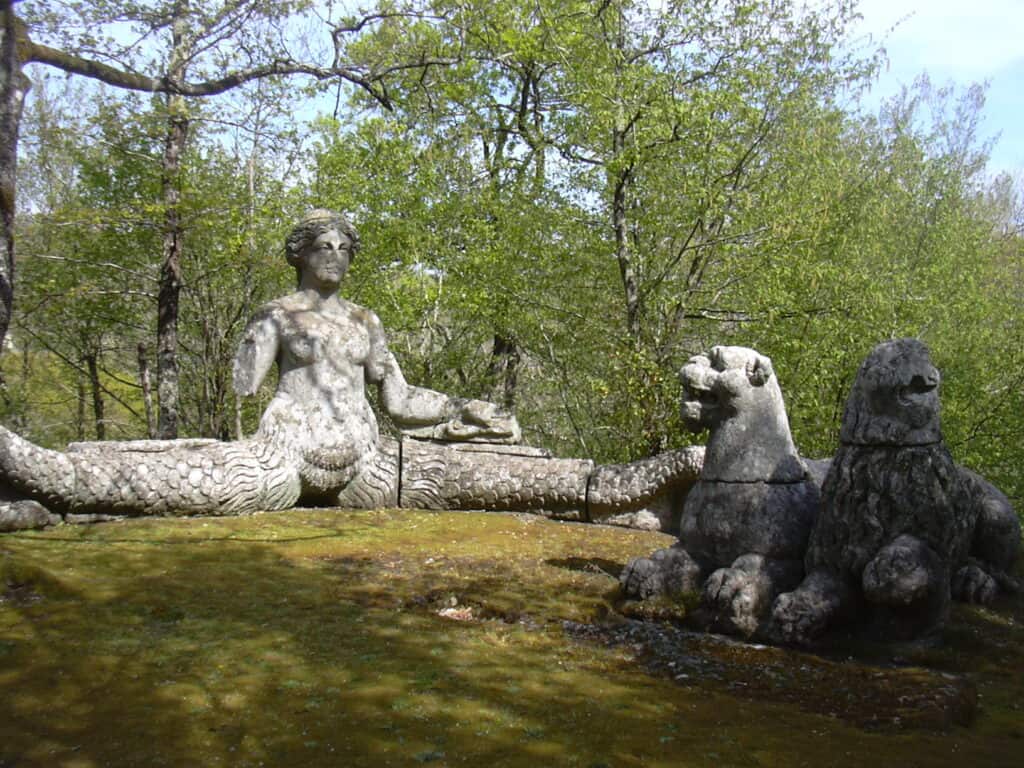
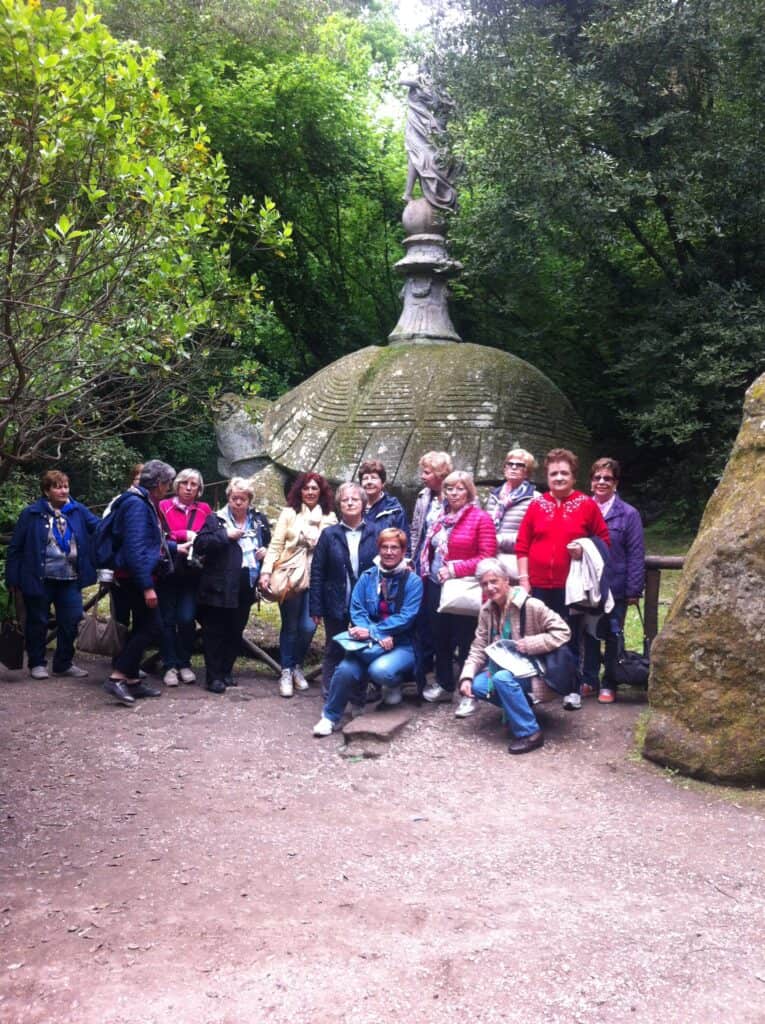
Not far away Nike, the goddess of Victory, stands on top of a turtle that observes a whale emerging from the earth. The atmosphere grows damper and carries the scent of moss along the path and a few steps ahead a nymphaeum appears. Here the Three Graces dance while a Venus overlooks the road alongside a procession of dolphins guiding the visitors toward a theater carved in stone.
Half hidden among the surrounding trees stands a leaning house tilted sharply to one side. Inside, it becomes difficult to keep balance, as the sloping floor and distorted walls create a sense of dizziness. Some visitors even feel as though the house itself is slowly sinking into the ground. Yet the feeling of disorientation does not disappear after stepping outside. Instead, visitors find themselves staring at an inscription carved into the stone: “Animus quiescendo fit prudentior ergo” (“When the soul is silent, it becomes wiser”).
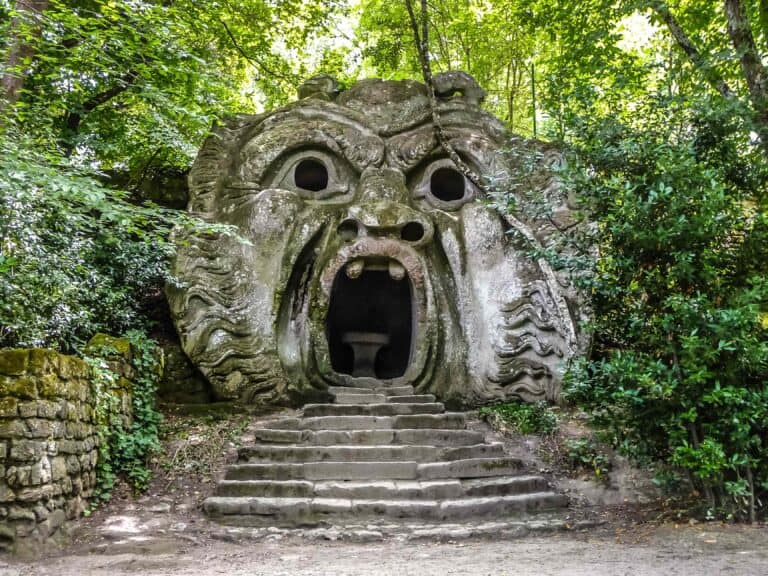
Above the leaning house stretches a lawn populated by mythical creatures, gods, nymphs, exotic animals, and the world-famous Orc awaiting visitors with its enormous open mouth. Carved onto its upper lip is another cryptic phrase: “Ogni pensiero vola” (“Every thought flies”).
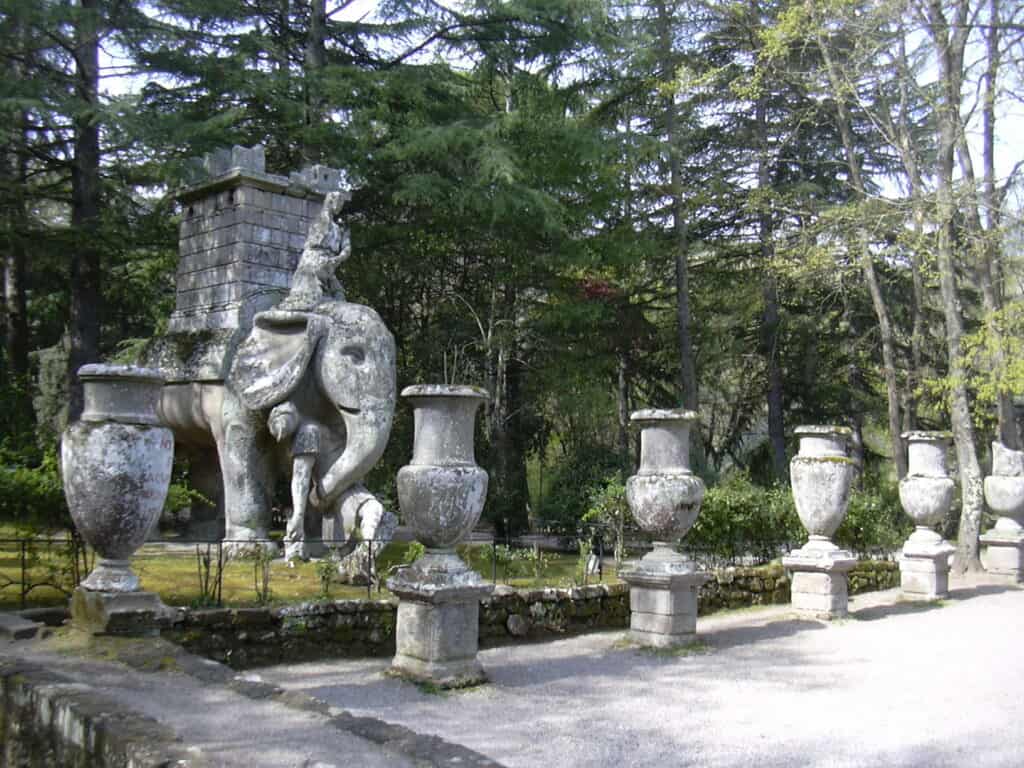
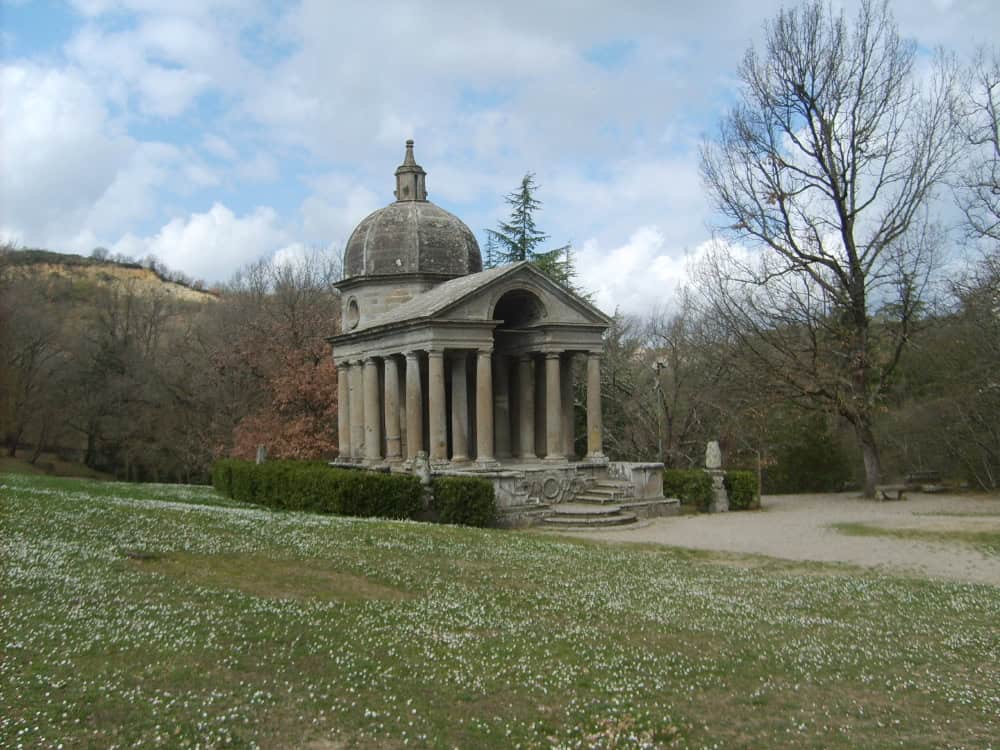
The walk continues among vases and pinecones, Cerberus and lions, Goddesses and monsters, every statue seems to hold a hidden meaning yet to be understood. At last, the wood opens in a meadow where a temple has been built. It now holds a memorial plaque in memory of Tina Severi Bettini and Giancarlo Bettini, whose restoration efforts helped preserve and reopen the Sacro Bosco to the public.
It is worth noting that the current layout of the attractions, with a few documented exceptions, is not the original one, but dates back to the second half of the 20th century, when the Bettini family took over the site and restored it to use.
Unfortunately, the story and the enigmas carved by the skilled hand of Pirro Ligorio probably will remain a secret lost in time. Yet the surviving symbols and inscriptions still reveal fragments of a story capable of astonishing every visitor who enters the sacred wood of Bomarzo.